
 Otaki Today
Twenty-three young wāhine from Ōtaki and Horowhenua area colleges got a rare opportunity recently to see what it was like to work on the Ōtaki to North of Levin expressway.
The event, hosted by the alliances constructing the road, is part of this year’s Connexis Girls with Hi-Vis programme. The nationwide initiative gives young wāhine hands on exposure to careers in infrastructure, helping them see the many diverse pathways available across roading and construction projects.
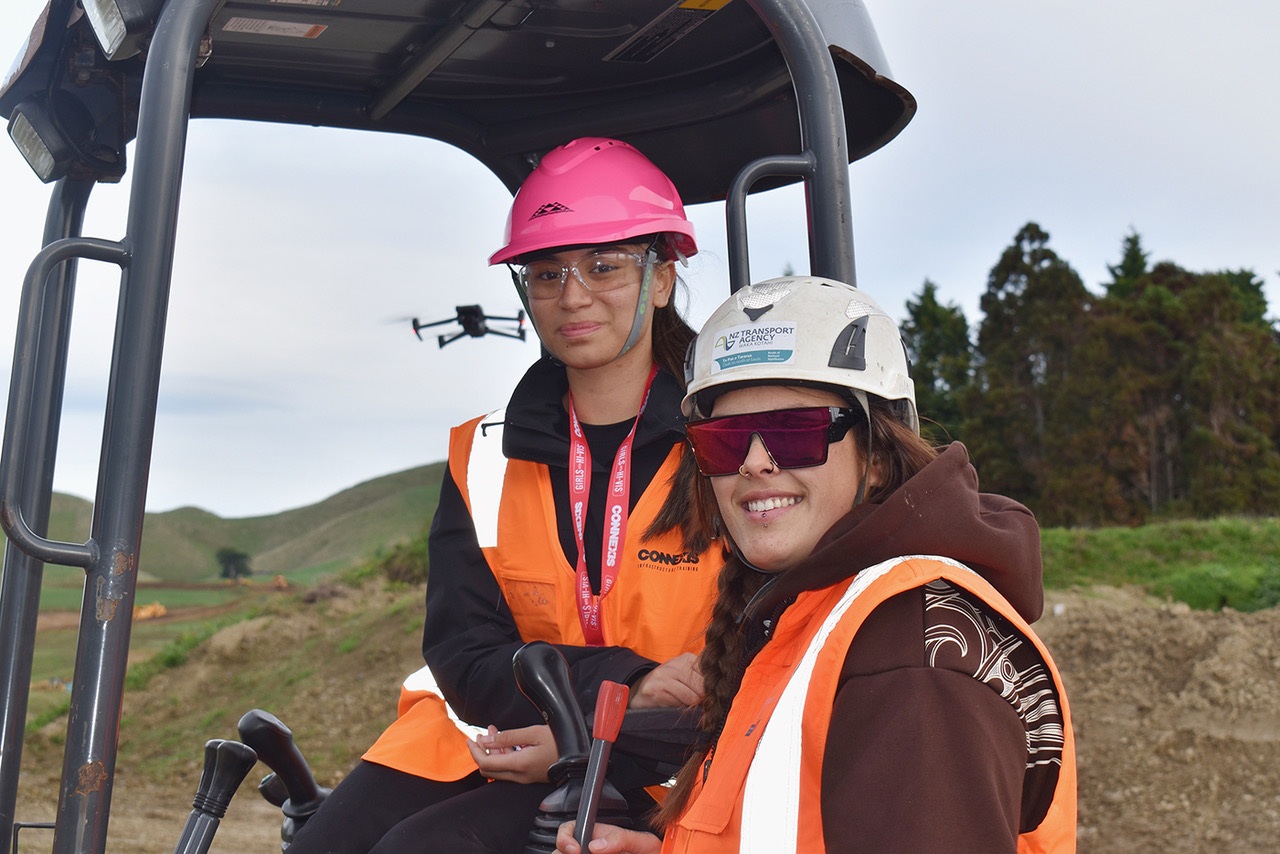
Okamanea Houia of Te Kura Kaupapa Māori o Te Rito tries her hand on a digger, watched by a drone and Downer Construction leading hand Hana Puketapu-Deyes. Photo Ōtaki Today
The year 11-13 students – from Ōtaki College, Te Kura Kaupapa Māori o Te Rito, Horowhenua and Waiopehu colleges – donned hard hats, reflective vests and steel-cap boots, with those visiting the southern alliance looking around the work site at South Manakau Road. They talked to some of the construction team and tried their hand operating small diggers, did some traffic management exercises and sat in on typical health, safety and environmental sessions.
Project director Glen Prince says Girls with Hi-Vis is an important opportunity to show rangatahi that careers in infrastructure and roading are achievable and rewarding.
“As a project working in this rohe, we’re committed to creating meaningful opportunities for local rangatahi and hope to have inspired the next generation of people who may one day help plan, build, operate and care for the Aotearoa transport network.”
Connexis, an infrastructure industries training provider, organises for female secondary students from around the country to visit local employers to find out more about the career opportunities in industries such as civil construction, electricity supply, telecommunications and water treatment.
Connexis executive director Kaarin Gaukrodger says that in 2015 only 8 percent of trainees in trade and technical roles were female – today it’s 16 percent.
“Women still represent a largely untapped employment market for a lot of our infrastructure industries, many of which are facing skills shortages,” she says. “One of the most effective ways of changing that is simply awareness.
She says many of the students attending a Hi-Vis event see new opportunities, and they make key connections with local employers.
OTHER STORIES
... loading ...