
 Otaki Today
Graeme Campbell has been managing flood risk on the Ōtaki River for 19 years – but he’s moving on.
His role with Greater Wellington Regional Council has seen him look after waterways from Wairarapa through the Hutt Valley and Wellinton up to Ōtaki. He’s clearly enjoyed his job, which is now taking him into a new role with Te Uru Kahika, a new national body that represents the 16 regional and unitary councils throughout the country.
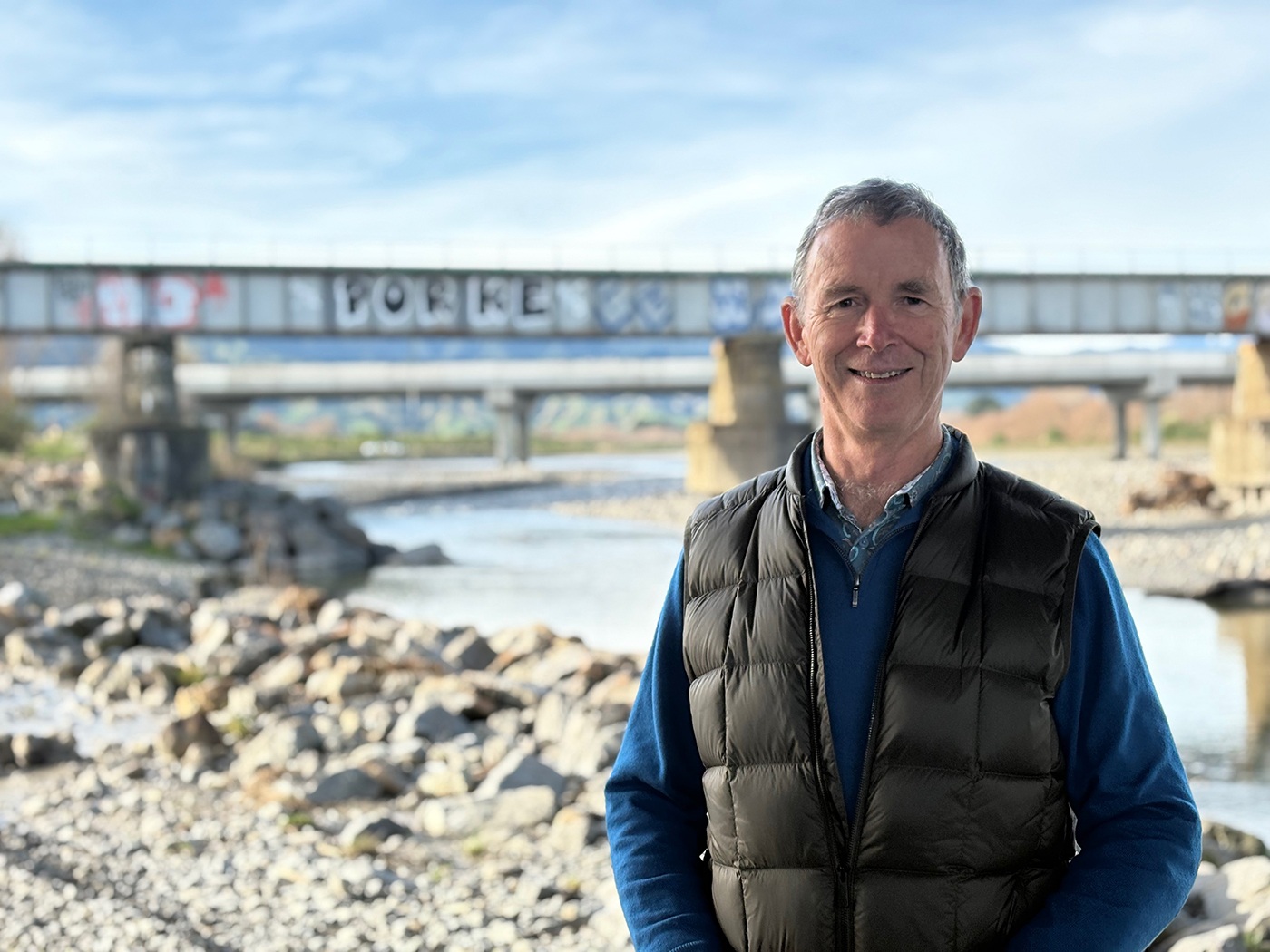
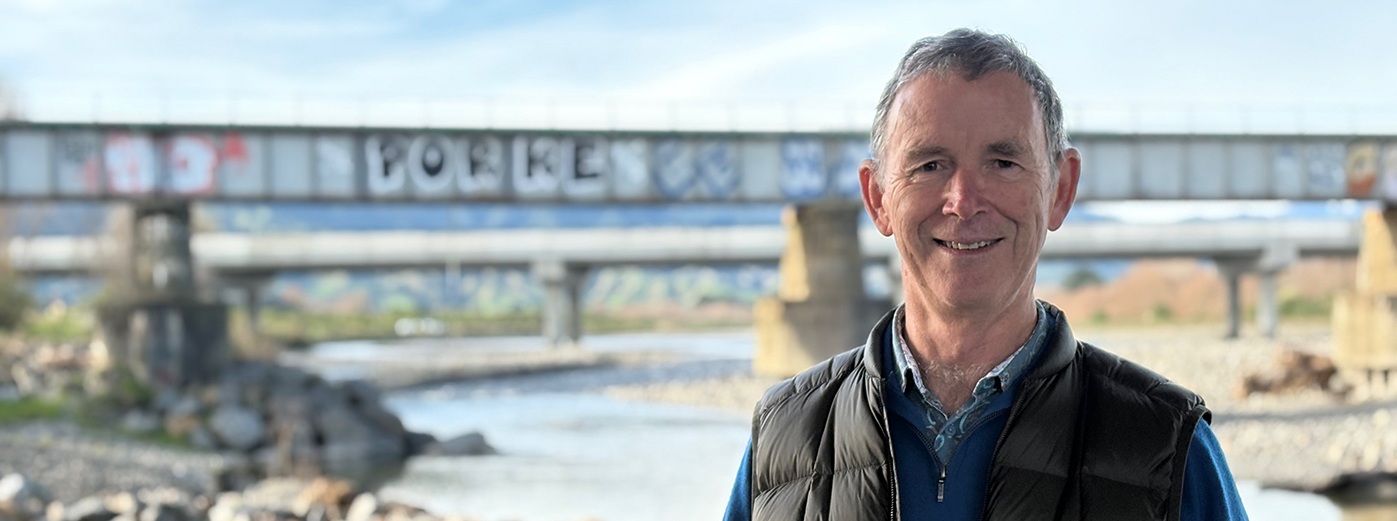
Graeme Campell at the Ōtaki River – “You can’t get rid of the flood risk. It’s always going to be there. You can only manage it.” Photo Ōtaki Today
Although he’s been flood risk manager for 19 years, he’s been involved in work on the river since the early 1990s. He’s worked with the community on a plan for how the river should be managed.
“There was a lot of flooding in the early 90s, a lot of damage with erosion and so on,” he says. “So we sat down with the community to understand the problem, and then look at ways the flood risk could be managed.
“We developed a plan, signed it off in 1998 and started implementing it.”
Some of that work started even before 1998.
“It’s not a five-minute job, or even a five-year job. The river’s here forever so it’s a long-term plan.”
Graeme is proud of what’s been achieved on Ōtaki River, crediting much of that to the relationship the regional council has had not only with local landowners and iwi, but also the Friends of the Ōtaki River, which was set up as the management plan was being drawn up.
“Establishing this group to enable the planting, and recognising the value of the ecology of the river has been fantastic,” he says. “You go up the river now and see the difference.
“In the 1990s there were car bodies, old bits of US Army machinery, concrete, all sorts of stuff. Now it’s magical. It’s all due to the hard work of the Friends and the community.”
One of the biggest projects has been to build the Chrystalls Bend stopbanks, plus erosion works up and down the river. Work on the “choke” in the river, which as 80 metres wide, has resulted in the channel now being 250 metres wide.
The latest work is to stabilise the Ōtaki Cliffs on the south side of the river where it flows from the gorge. In heavy rain, the cliffs are gouged away, not only creating erosion but also filling the river with silt.
Graeme says maintenance is critical to ensuring infrastructure works are viable.
“You can’t just build something and walk away,” he says. “It’s an every day job.”
He calls the work flood risk management.
“The core building blocks are the stuff you do in the river every day, the stopbanks and the rock lines, and then making sure the land use is matched with the flood risk. You can’t get rid of the flood risk. It’s always going to be there. You can only manage it.”
He says assessment have to be made about where Ōtaki is developing, what land use is occurring upstream of Chrystalls Bend, whether there’s intensive farming or housing.
Retaining or improving the ecology of the river has always been important for Graeme in his flood risk management.
“The work we do to manage the flood risk is strongly connected to the ecological value of the river. We have to make sure we are looking after it, leaving it in a better state than it was. People walk up there now and they love it.”
His new job will involve making the voice of the 16 regional and unitary council heard by central government.
“The government doesn’t want to talk to 16 different councils,” he says. “As a collective we can go to central government with a single voice.”
He says the government could utilise councils’ relationship with the community to get this work done.
“It’s almost like the government doesn’t want to get its hands dirty. But that councils can do that work needs to be recognised.”
He also says regional councils need to speak up more about what they do.
“I understand people’s concerns about the regulatory and consenting process, but it’s only a part of what a council does. There’s also public transport, bulk water supply, biodiversity, pest control and of course flood protection.
“The public doesn’t hear much about all that.”
OTHER STORIES
... loading ...