 Otaki Today
Since the mid-1800s, Ōtaki residents have been fortunate in the provision of public health services.
The first doctor to practise in Ōtaki was Charles Hewson. He was appointed in 1853 to “attend to and prescribe for Ōtaki Māori”, according to his obituary in the Manawatu Herald of July 29, 1881.
“Having learned there was a large native population (much larger than at present) in the neighbourhood of Ōtaki, he determined on settling there, and has resided there ever since, receiving a salary from government for attending upon and prescribing for the natives until shortly before his death.”
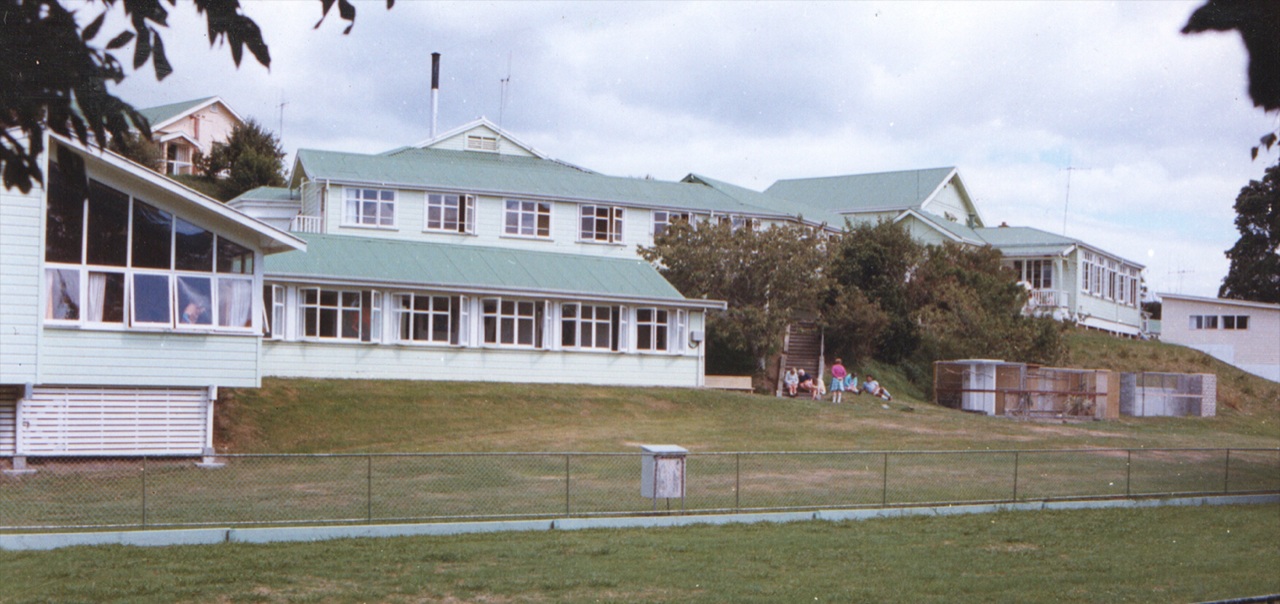
The Ōtaki Sanitorium – The San – not long before it closed in 1985.
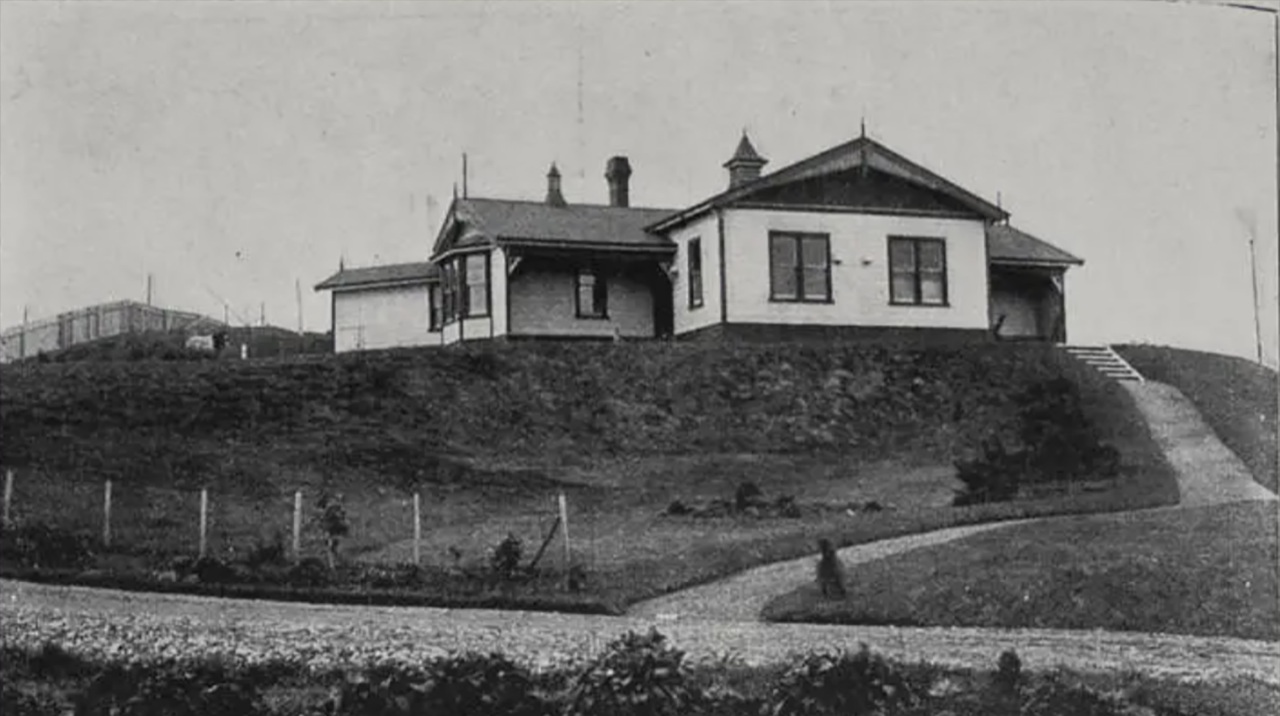
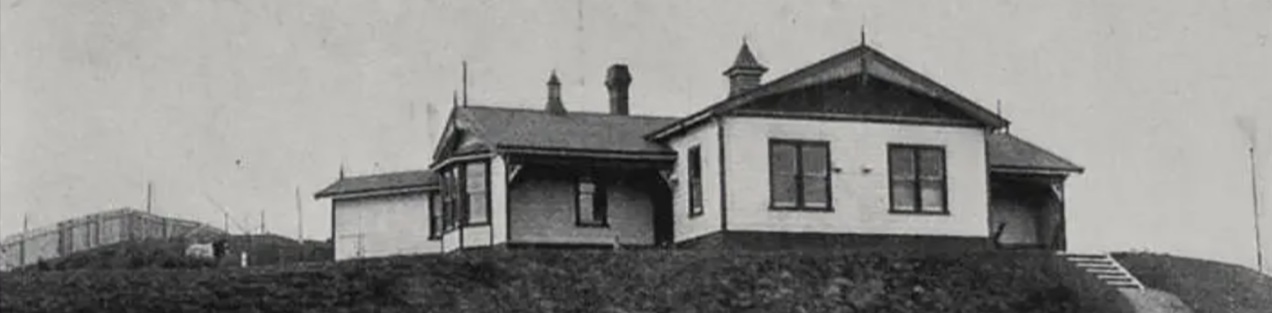
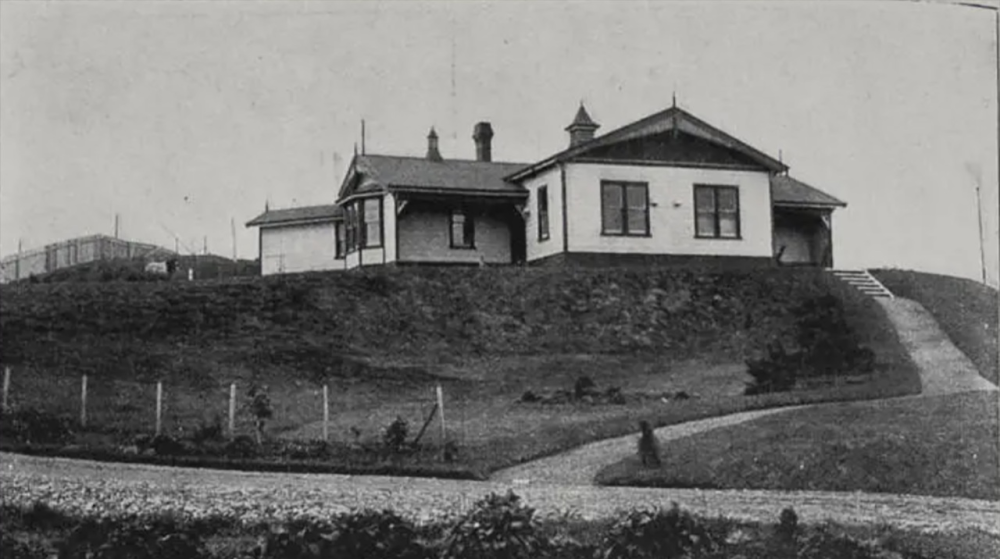
Ōtaki Cottage Hospital in 1905 – it opened in 1899. The hospital was built on the urging of Dr James Mason, who was the hospital’s first surgeon. Photo Auckland Libraries
Dr James Mason then came to Ōtaki in 1895, seeking a “more congenial climate” than his birthplace of Scotland.
“He came out from the Old Country in search of the elixir of life, and found it Ōtaki, of all places,” the New Zealand Freelance noted. “He there built a home, sent for his family, and said in effect, ‘Here is my habitation, for here only I can live’.”
Whatever was in the water here certainly seemed to pep him up as he was then appointed “native medical attendant” for the Ōtaki district. But so good were his energy levels that he then went on to propose, in 1896, the construction of a cottage hospital in Ōtaki. Despite some hiccups with the tendering process, he was promised the position of surgeon at the new hospital.
The Ōtaki Cottage Hospital opened in 1899 with Dr Mason in his new job. It was soon after, however, that he sought a more bureaucratic career path. With his skills as a bacteriologist, he took positions at a national level where he focused on public health, culminating in the Public Health Act being passed in 1900.
Ongoing interests in sanitation, vaccinations and Māori health led to his part in setting up tuberculosis sanatoria, one of which was in Ōtaki. This achievement was to be another of his legacies, as he died in 1924, aged only 59.
The Ōtaki Consumptive Sanatorium opened in 1907, built with public donations, local body and government subsidies. It was hailed for both its purpose and its buildings, designed by renowned architect Frederick de Jersey Clere. It stood near the Ōtaki Cottage Hospital on a long driveway off Mill Road. The land was originally gifted by tangata whenua to the Church Missionary Society, but through various legal acrobatics was eventually transferred to the Crown.
For the first 19 years the buildings housed male and female tuberculosis patients, and from 1917 returned soldiers with TB. From 1919 only female patients were admitted, until 1956 when male patients were again included.
Over the years, alterations and additions were made to the building and its purpose changed when it was taken over by the Palmerston North Hospital Board. When faced with a bill for improved sewage disposal, the board passed the sanatorium on to the Kimberley Hospital & Training School until 1985, when residents were moved to the Kimberley property in Levin.
During its many manifestations, the “San” as it was known, continued to be supported and cherished by locals. Many people were employed there; others volunteered their time and resources to entertain and care for the residents.
The Ōtaki buildings fell to wrack and ruin, despite efforts of the local community. In her article in the OHS Journal (Vol 20,1997) Margaret Long records the last few years of the important medical and architectural landmark:
“Over the next 12 years the buildings were remorselessly plundered of everything of any value, including stairway[s], doors and windows, Finally the Manawatu CHE contracted a demolition firm to clear the buildings from the area.”
These days only some of the concrete foundations remain within the bush that has taken over much of the previously 92-acre site
The buildings that once housed the Ōtaki Cottage Hospital – also designed by Frederick de Jersey Clere – still remain on the site. As with the San, there were disputes between politicians and locals about its continued existence.
Nevertheless, the facility endured and as a result of negotiations between the Department of Health and the Palmerston North Health Board, maternity services were added, previously unavailable to all those who could not afford to give birth in one of the private institutions that had been set up in the town. The maternity ward was initially the only public facility within the Kāpiti-Horowhenua area until Levin and Paraparaumu had their own in the 1950s. By this stage, the Ōtaki Hospital was solely a maternity facility, becoming known, in 1932, as the Ōtaki Maternity Home.
Midwife Jane Stojanovic, who had worked at the maternity home, told the NZ College of Midwives Conference in July 2002 that the home was enjoyed and supported by the Ōtaki community, but it was expensive and often empty.
“Sometimes three weeks would go by with no women being admitted,” she said. “The place lost its ‘soul’ when the hospital was altered to try to save money.”
The buildings were utilised for other health-related services and post-natal care reduced. However, the maternity hospital survived until 1992. For three years after the closure, the buildings were used as a community health centre and a 48-hour birthing centre, but these, too, were stymied by health authorities and were closed in 1995.
Locals again rallied in opposition to the closure of health facilities, and the buildings were then used for the Women’s Health Centre, offering a range of support services. Further funding pressure also closed the centre, in 2020, once again deeply affecting the community that had, for over 125 years, battled hard for public health provision in Ōtaki .
Any likelihood of the site being used again as a public health facility is doubtful. The current political pressure is to privatise health provision nationally, and tangata whenua has a Treaty of Waitangi claim over the use of the land they gifted to the town that was later taken by the Crown.
Given that local iwi have recently set up their own medical practice – Oranga Ōtaki – which operates as a charitable trust, the future may not be so bleak even though the site remains, once again, under a jurisdictional cloud.
• Nicky is a former journalist with an interest in local history.
OTHER STORIES
... loading ...